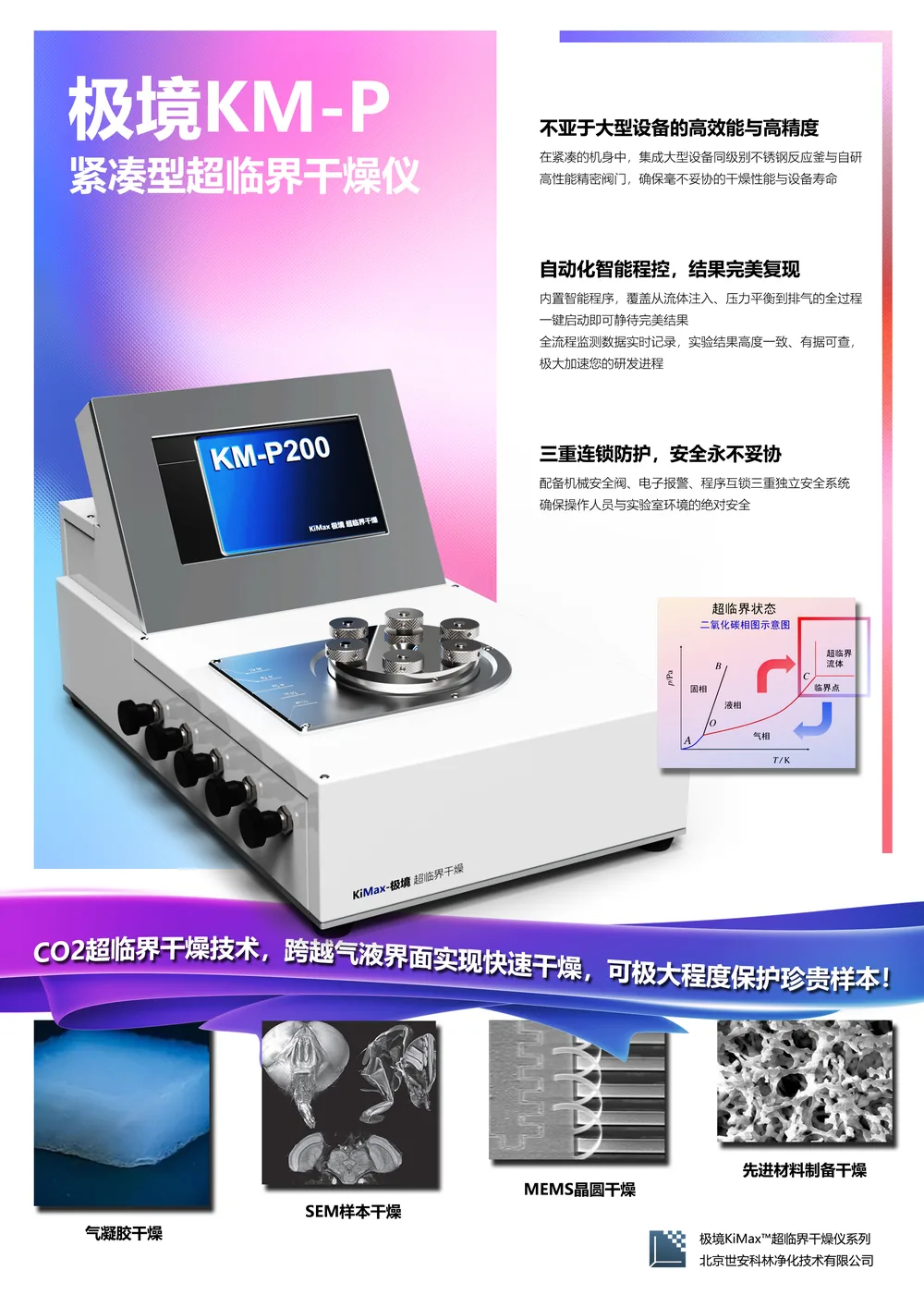
KM-P · Benchtop Sample Preparation
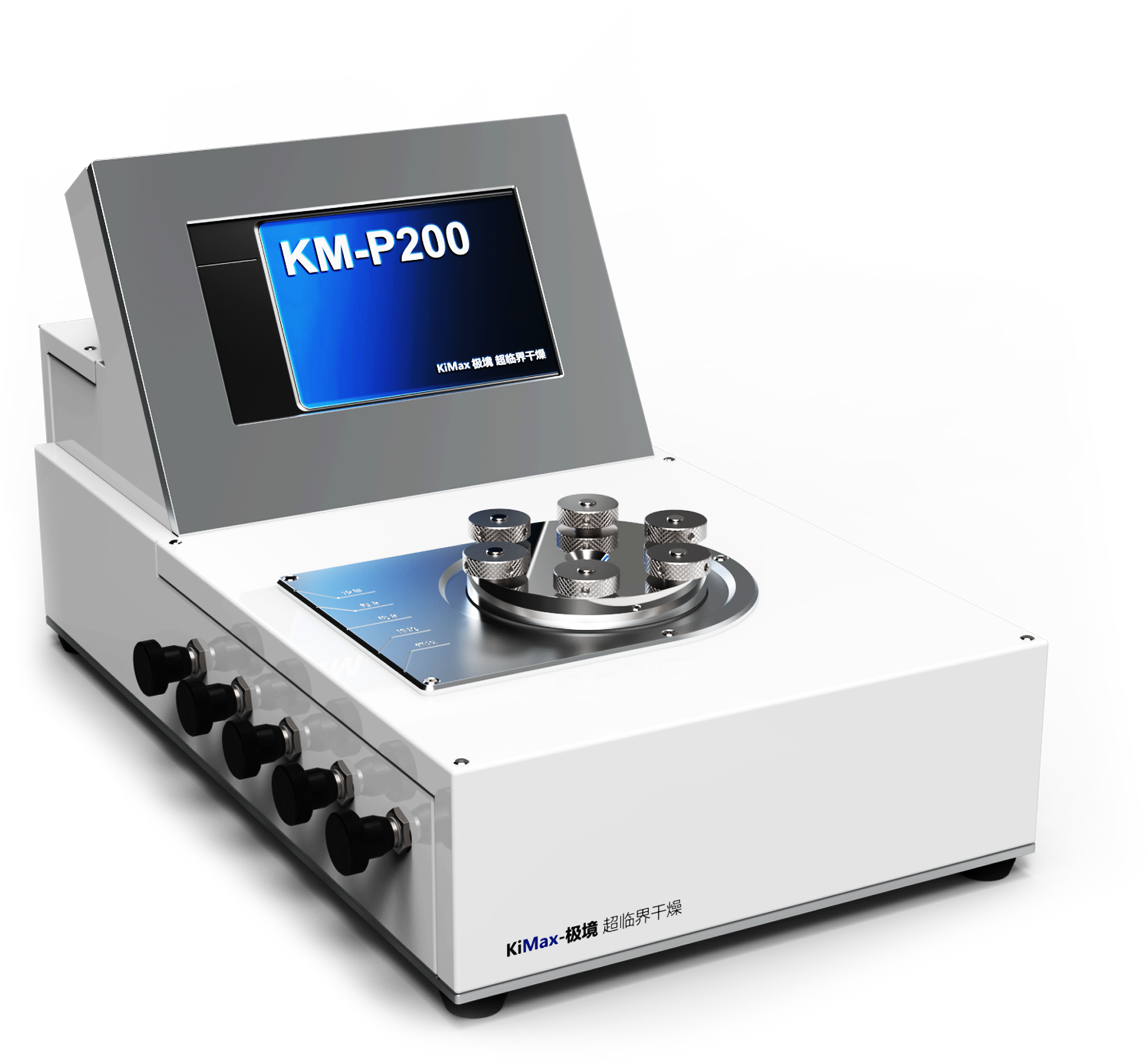
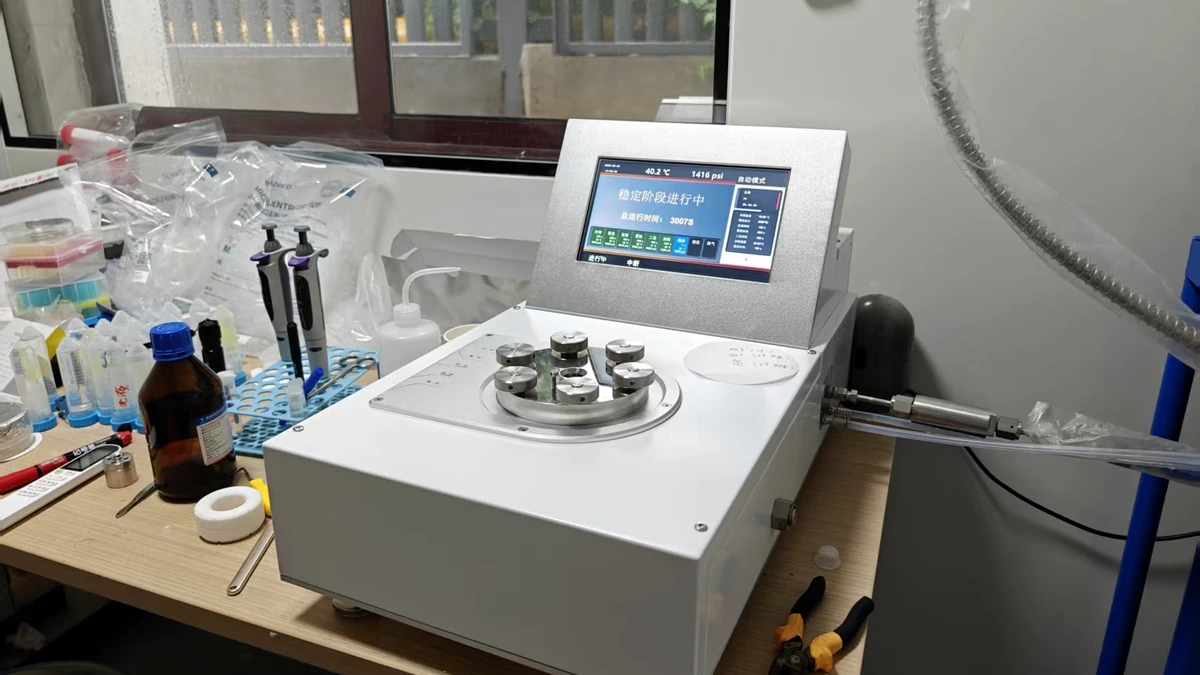
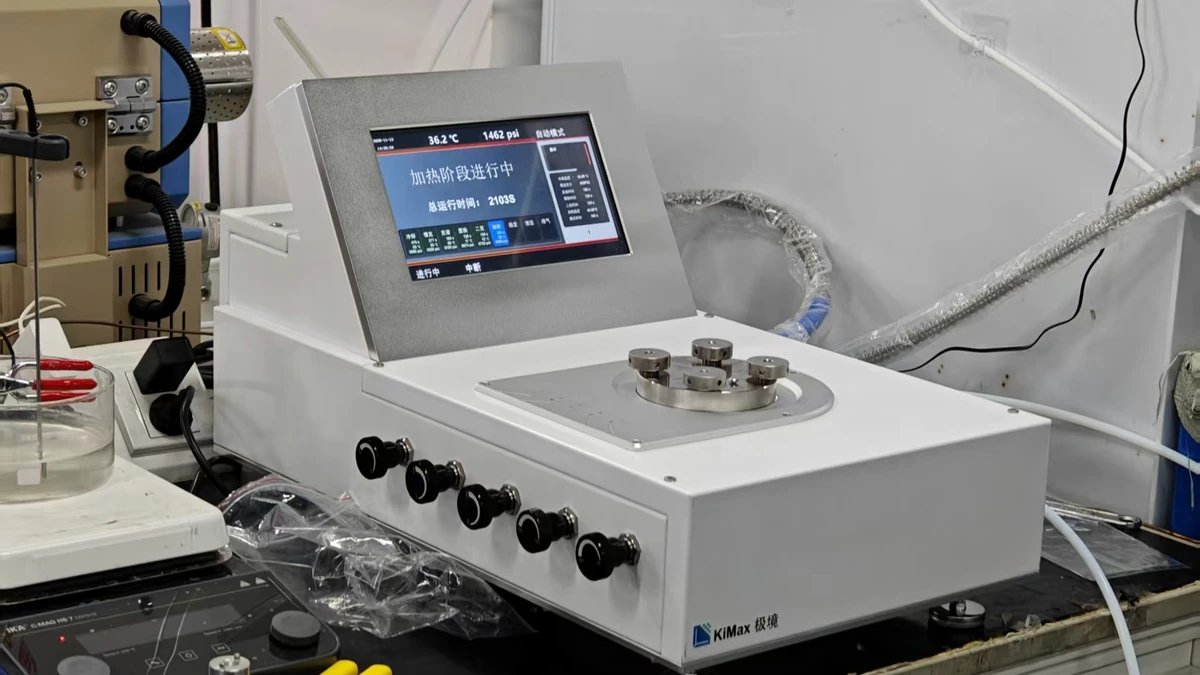
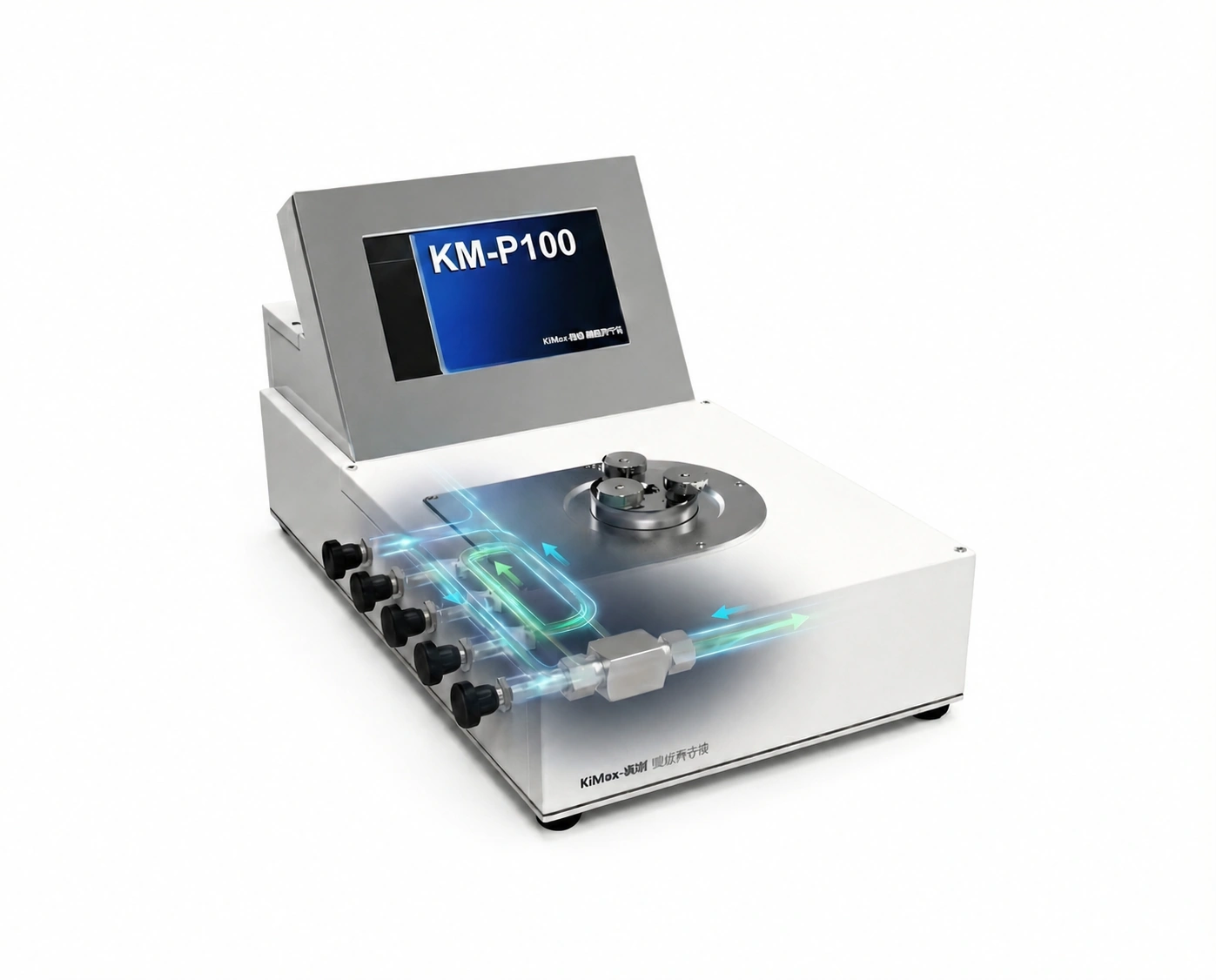
KM-P Compact Supercritical Dryer
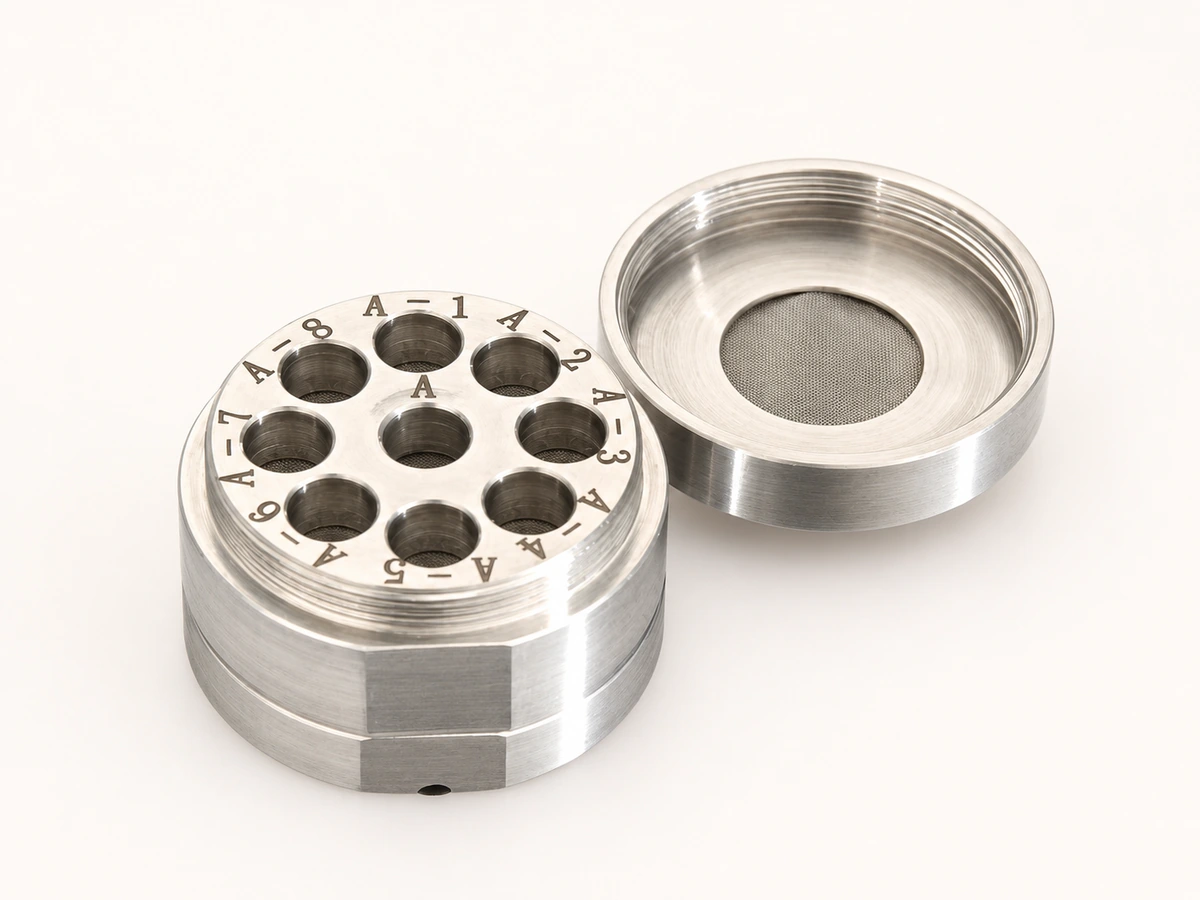
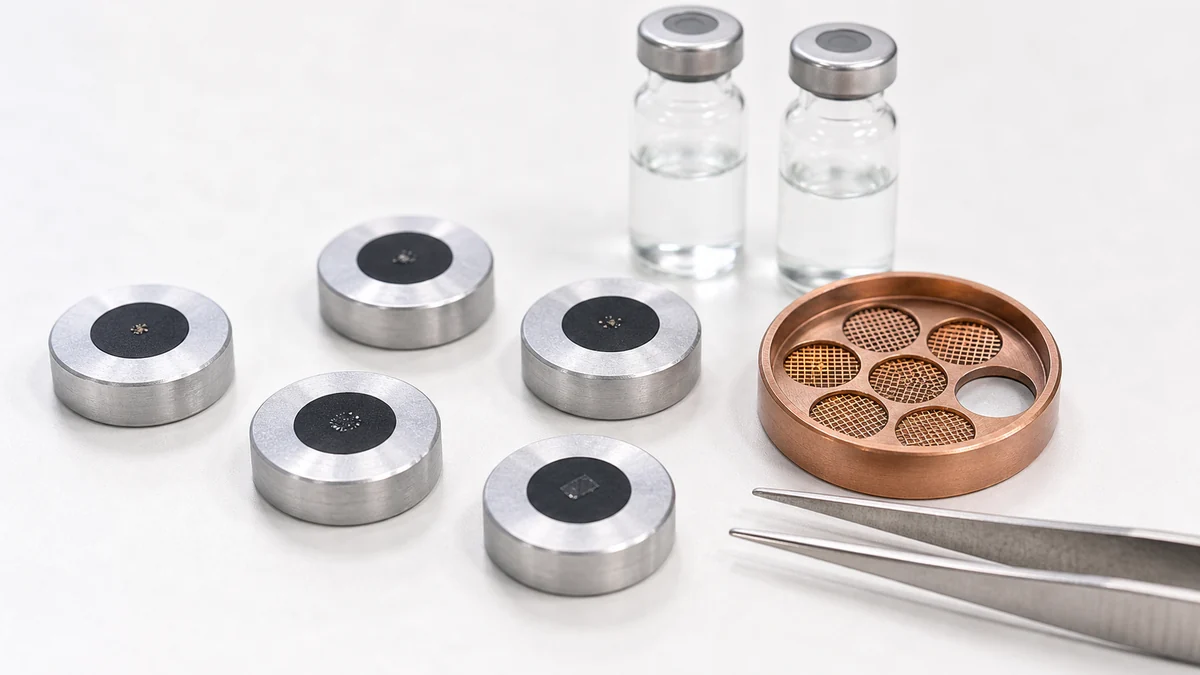
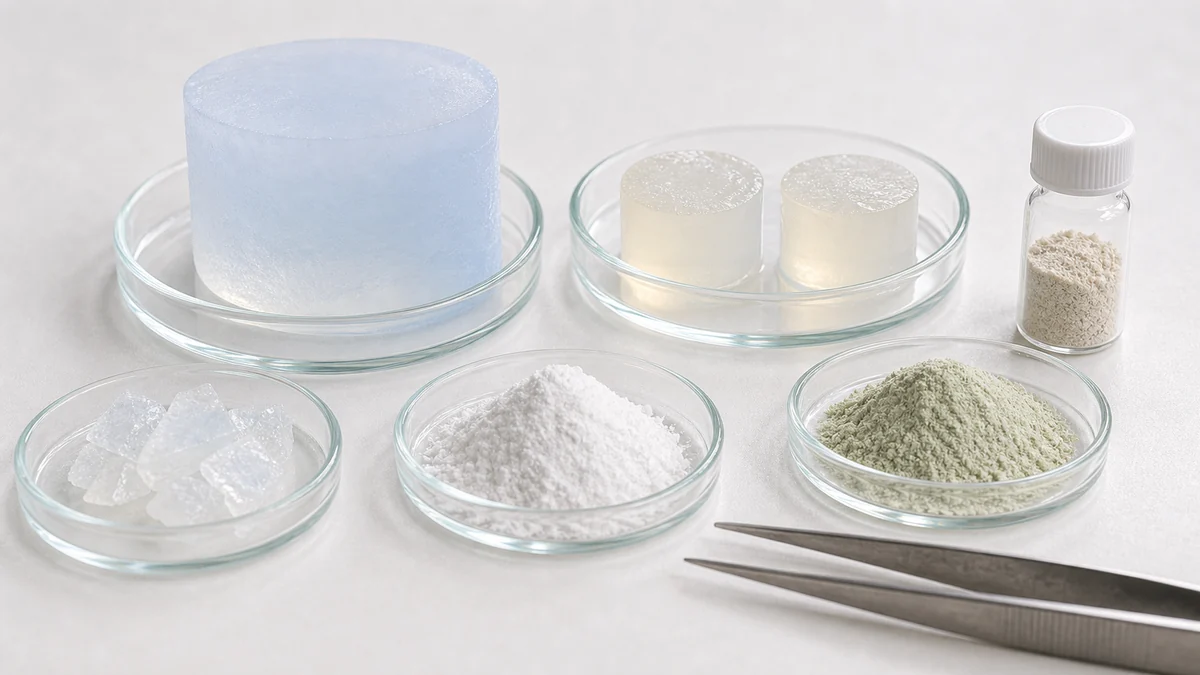
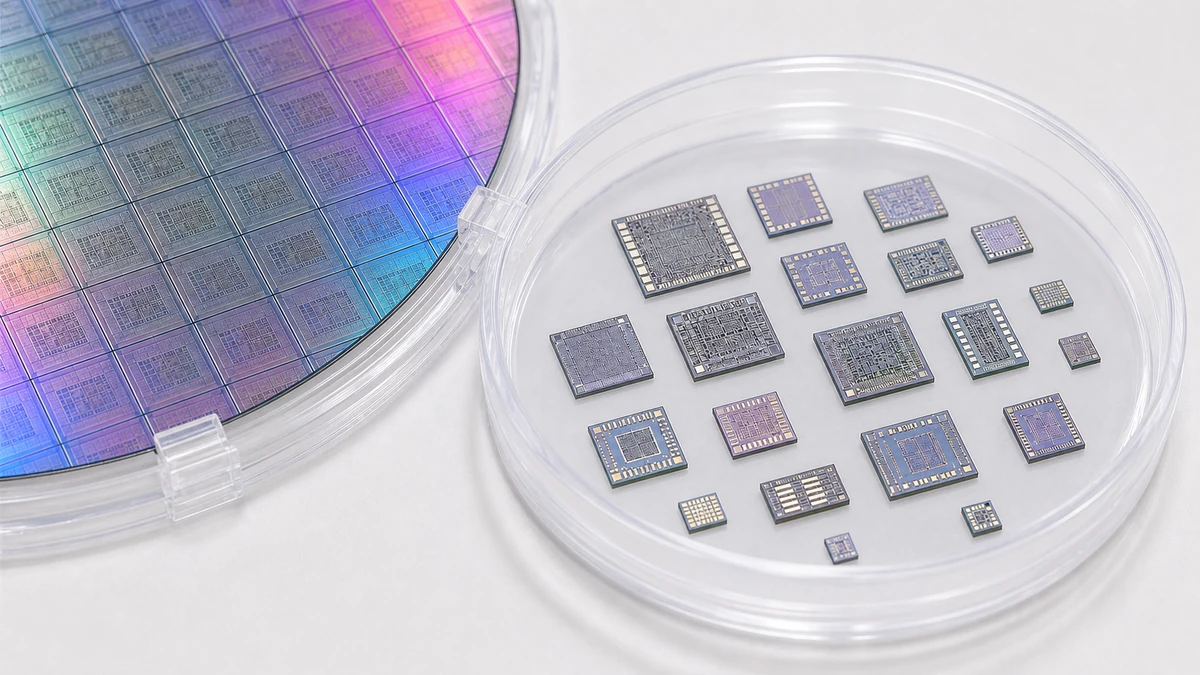
KM-P prepares microscopy specimens, aerogels and microstructures in standard chambers of about 100 or 186 mL.
Sample chamber2.5-inch approx. 100 mL
3.4-inch approx. 186 mL
3.4-inch approx. 186 mL
Operating / Safety Limit0-1500 psi · 0-50°C
2000 psi · 55°C
2000 psi · 55°C
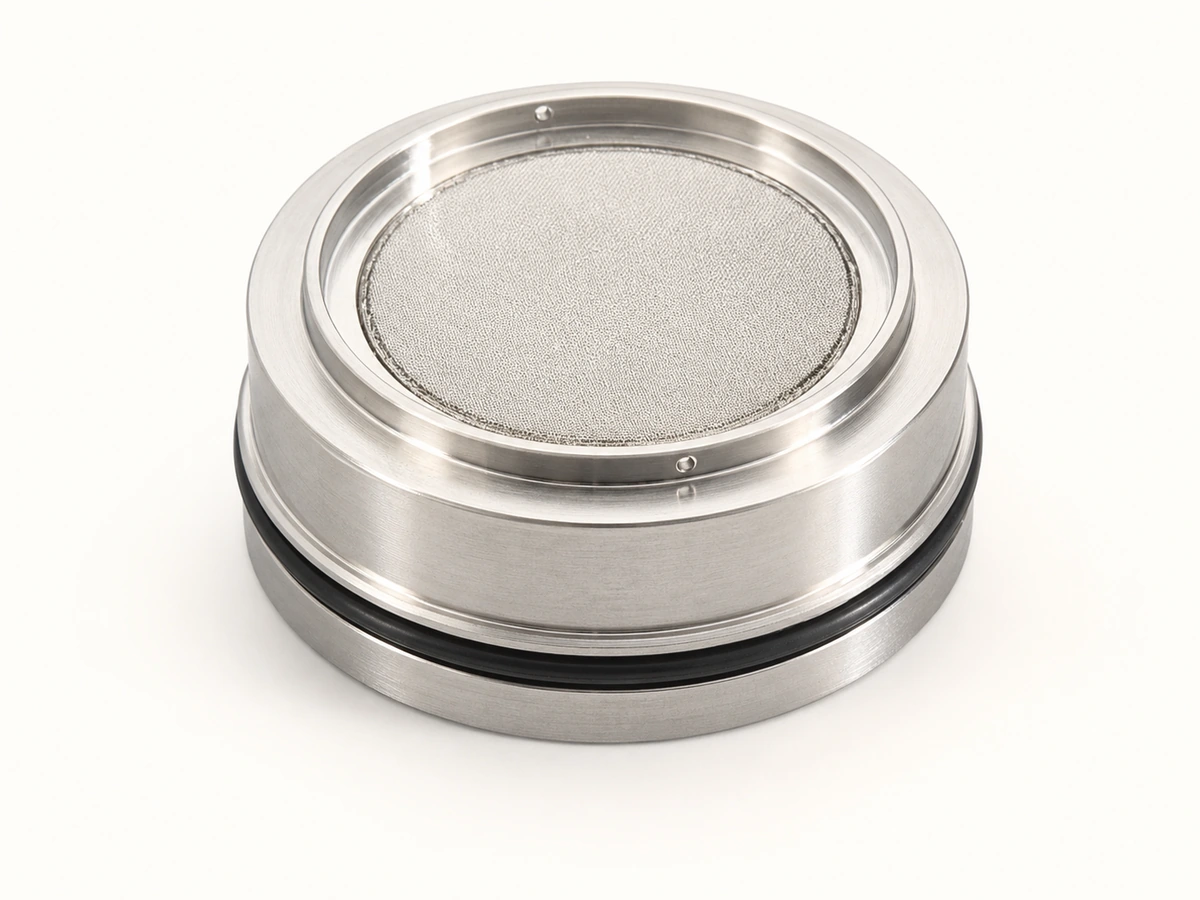
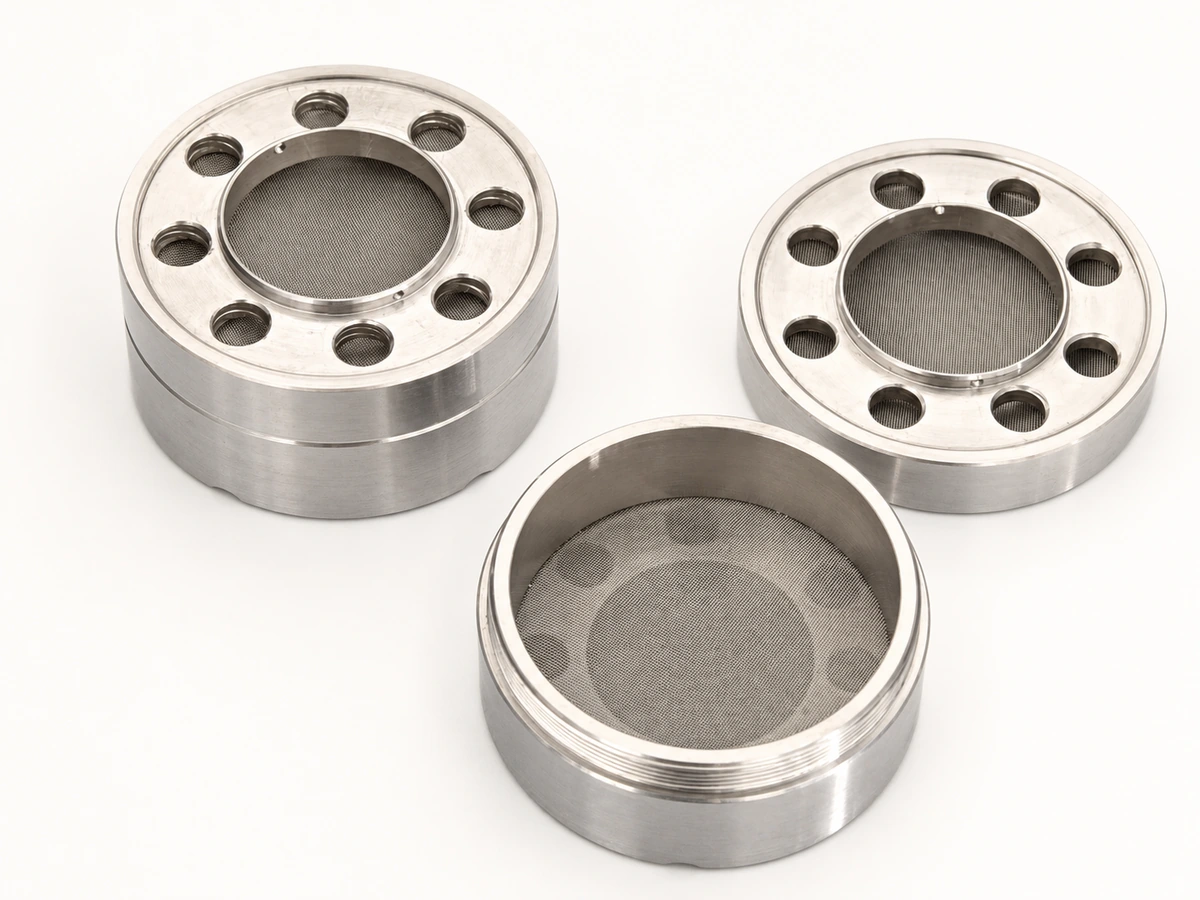
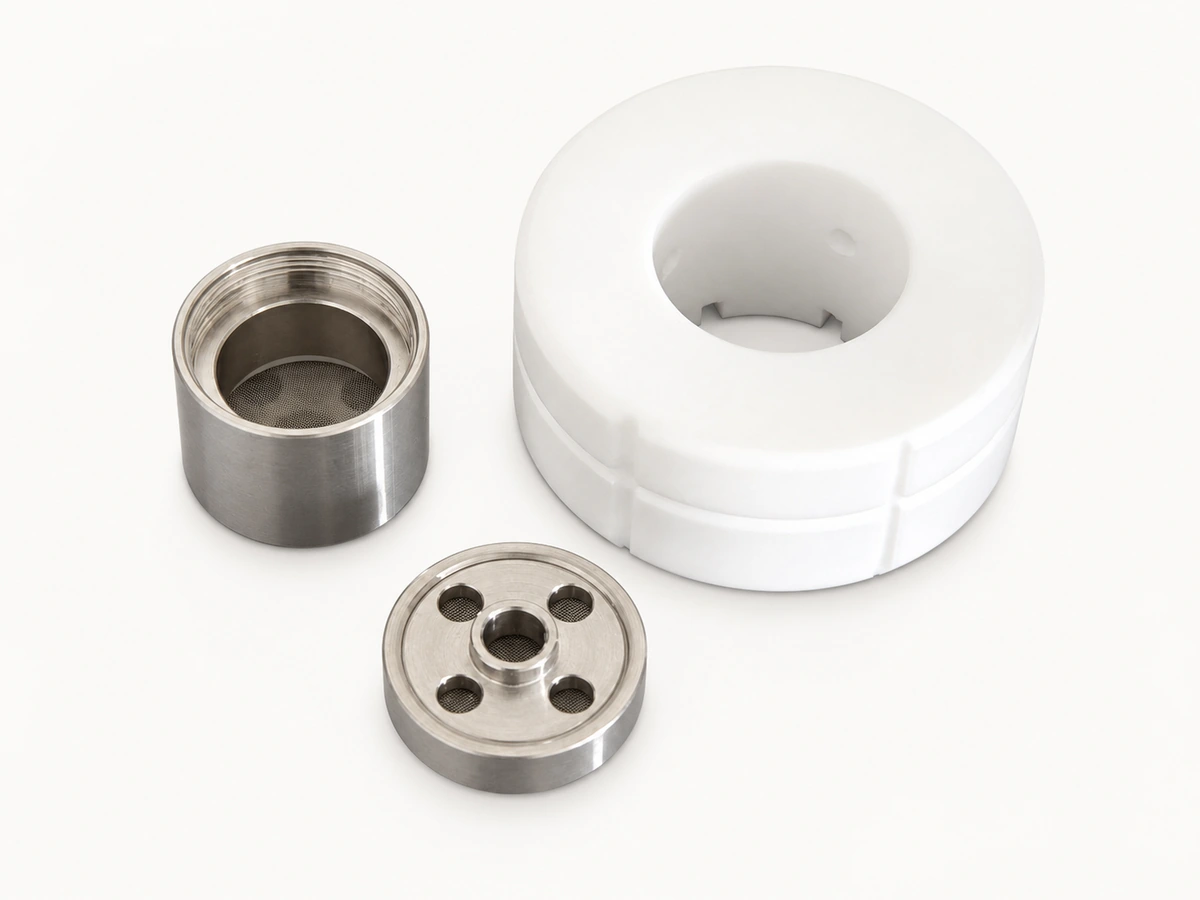
FiltrationBased on sample and cleanliness needs
Confirm final configuration
Confirm final configuration
FootprintApprox. 62 × 40 × 33 cm
Approx. 500 W
Approx. 500 W